Wide Shot : Shows the character from head to toe.
To make films
first learn the ART of FILM Making
cinematography as “the art or technique of motion-picture photography.”
The director, being the chief creative person for a movie, is in charge of the cinematography with the director of photography or the cinematographer being in charge of the actual camera, lighting, and electrical crews.
Director of photography (DP) as being “in charge of the actual image of a film project. They direct the camera/grip/lighting crews as to how the lights should be placed, how the camera should be exposed, and basically anything related to the film image. They will also choose the film stock and processing for the film. Many times the DP will be present during color timing as well. The DP works very closely with the Director to realize his vision of how the film should look.
Director of photography (DP) as being “in charge of the actual image of a film project. They direct the camera/grip/lighting crews as to how the lights should be placed, how the camera should be exposed, and basically anything related to the film image. They will also choose the film stock and processing for the film. Many times the DP will be present during color timing as well. The DP works very closely with the Director to realize his vision of how the film should look.
Close up : Face and shoulders are showing, and it shows the expression on the character’s face very well.
High Angle : The camera, placed above eye level, is looking downward. This shot is often used to make the character seem small, weak, young, or confused.
Medium shot : Shows the upper body, arms, and head.
Extreme close up : Only part of a character’s face is visible. It fills up the entire frame with details.
Medium Angle : Most commonly used.
Low Angle : Used to make the character seem bigger, stronger, more frightening, or nobler.
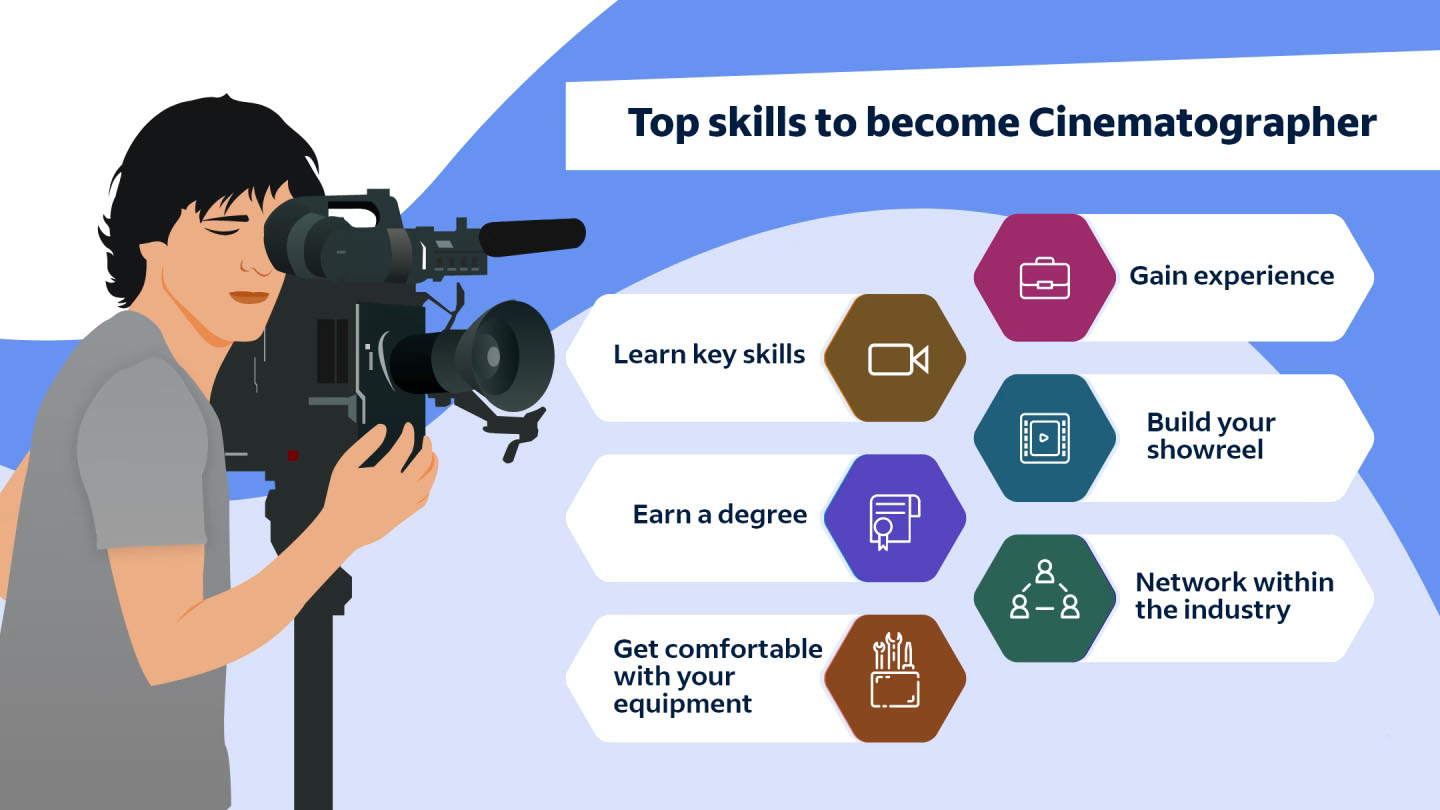
Cinematography
As one of the best cinematography Academy’s in Bangalore, the SHREENIDHI FILM INSTITUTE is committed to educating the next generation of cinematographers to develop their own unique visual voice while gaining intensive hands-on experience working and learning with the Institute distinguished faculties from the industry.
By immersing students in a practical study of the many facets of cinematography through our hands-on, intensive curriculum, it comes as no surprise that our institute is considered by many to be the best Cinematography Academy around.
Cinematography students are taught alla aspects of film making from tha fundamnetals of still and motion picture photography. their courses includes visual composition , lighting , special effects, processing, editing and operating the mast sophisticated cameras
What does a cinematographer do?
1. Collaborate with other filmmakers
2. Scout locations
3. Acquire the proper equipment
4. Gather and oversee the camera team
5. Block out scenes
6. Review dailies
7. Make finishing touches in posts
2. Scout locations
3. Acquire the proper equipment
4. Gather and oversee the camera team
5. Block out scenes
6. Review dailies
7. Make finishing touches in posts